Capturing the Essence of the Marsh: A Beginner’s Guide to Abstract Marsh Painting

The allure of the marsh lies in its ethereal beauty, a landscape of muted tones and shifting textures. Capturing this essence on canvas requires more than mere representation; it demands an abstract approach, one that embraces the spirit of the marsh rather than its literal form. This guide will delve into the art of abstract marsh painting, offering a comprehensive exploration for beginners eager to embark on this artistic journey.
Understanding the Abstract Marsh
Before wielding brushes, it’s crucial to understand the essence of the abstract marsh. Unlike realistic depictions, abstract art seeks to convey emotion, mood, and the intangible qualities of a subject. In the case of the marsh, this translates to capturing its tranquility, its sense of mystery, its delicate balance between stillness and movement.
Think about the elements that define the marsh:
- The Water: Its stillness, its reflections, its subtle movement, its murky depths.
- The Reeds: Their graceful sway, their rhythmic patterns, their muted colors.
- The Sky: Its vastness, its changing hues, its reflection in the water.
- The Light: Its soft glow, its interplay with the water and reeds, its casting of long shadows.
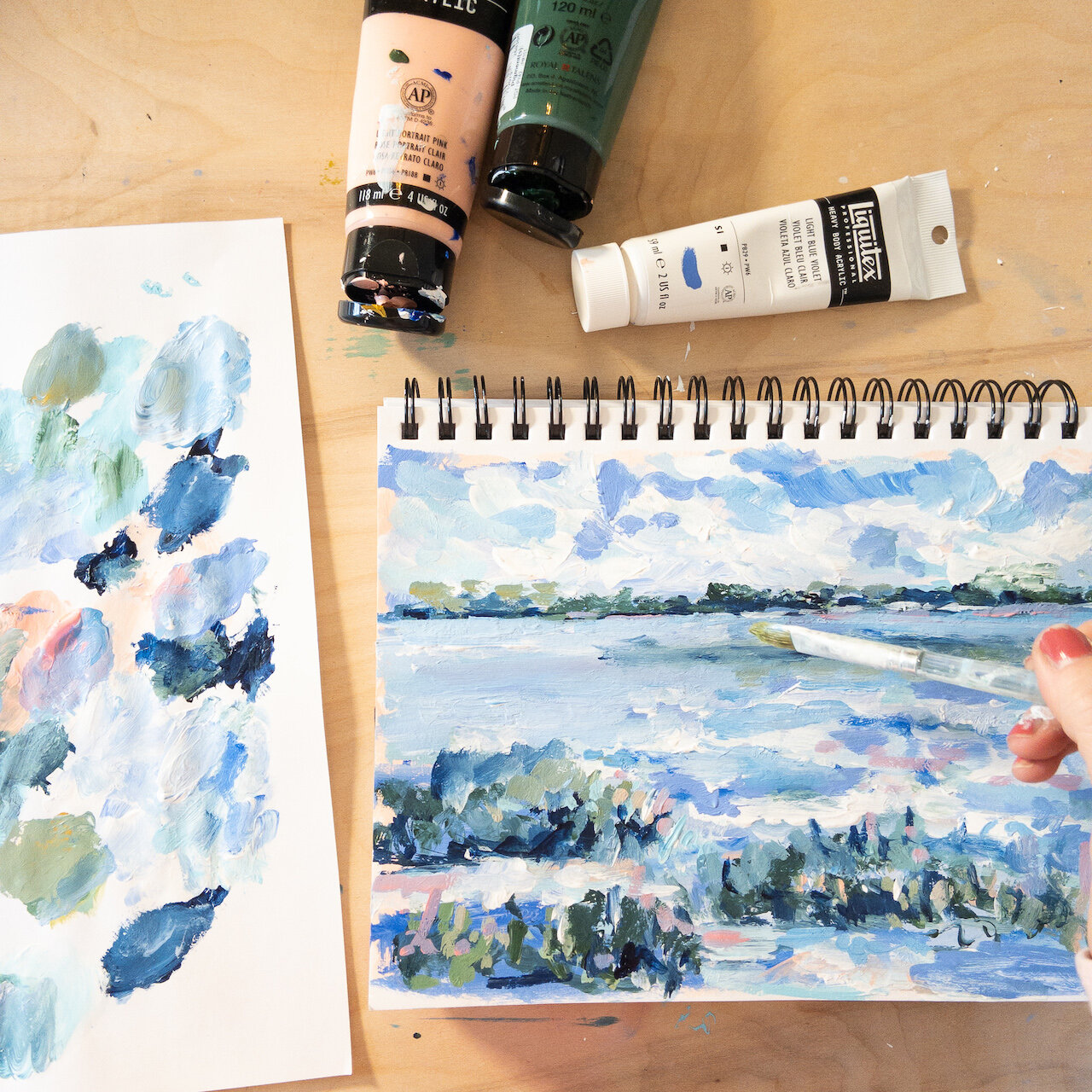
Choosing Your Medium and Materials
The medium you choose will significantly influence the final outcome of your abstract marsh painting. Consider these options:
- Acrylics: A versatile and forgiving medium, acrylics dry quickly, allowing for layering and experimentation.
- Watercolors: Perfect for capturing the soft, ethereal quality of the marsh, watercolors offer a sense of fluidity and transparency.
- Oil Paints: For a richer, more textured effect, oil paints allow for slow drying time, enabling blending and layering.

Beyond the Basics: Exploring Texture and Depth
Adding texture to your abstract marsh painting brings it to life, enhancing its depth and visual interest. Experiment with these techniques:
- Impasto: Applying thick layers of paint with a palette knife or a brush loaded with paint creates a textured surface reminiscent of the marsh’s mudflats.
- Salt Technique: Sprinkling salt onto wet paint creates interesting patterns and textures, mimicking the reeds and grasses.
- Collage: Incorporating natural materials like dried reeds, grasses, or even sand adds a tactile element and evokes the marsh’s natural textures.
- Glazing: Applying thin, transparent layers of paint over a base layer creates depth and luminosity, mimicking the interplay of light and water.

Color Palette: Evoking the Marsh’s Mood
The color palette you choose plays a pivotal role in setting the mood of your abstract marsh painting.
- Muted Tones: Opt for earthy browns, greens, blues, and grays to capture the muted colors of the marsh landscape.
- Complementary Colors: Explore the interplay of complementary colors like blue and orange, green and red, to create a sense of depth and vibrancy.
- Monochromatic Palette: Using different shades of a single color, like a deep blue, can create a serene and contemplative atmosphere.
Compositional Techniques: Guiding the Viewer’s Eye
Composition is the art of arranging elements within your painting to create a visually pleasing and impactful experience. Consider these techniques:
- Asymmetrical Balance: Create visual interest by placing elements off-center, allowing for a sense of movement and dynamism.
- Negative Space: Use the empty space within your painting to create a sense of depth and allow the viewer’s eye to rest.
- Focal Point: Establish a clear focal point within your painting, drawing the viewer’s attention to a specific area.
The Creative Process: Embracing Intuition and Experimentation
Creating an abstract marsh painting is an intuitive process. Don’t be afraid to experiment, to make mistakes, and to let your intuition guide your brushstrokes.
Here’s a step-by-step process:
- Inspiration: Spend time in nature, observing the marsh, taking photographs, and making sketches.
- Sketching: Experiment with different abstract compositions, exploring different shapes, lines, and textures.
- Color Palette: Choose a color palette that reflects the mood you want to evoke.
- Background: Start with the background, applying washes of color or textured layers.
- Foreground: Build up the foreground, adding layers of paint, textures, and details.
- Experimentation: Don’t be afraid to experiment with different techniques and materials.
- Reflection: Take a step back and assess your work, making adjustments as needed.
Examples of Abstract Marsh Paintings
To gain inspiration, explore the works of artists who have successfully captured the essence of the marsh through abstract art:
- Georgia O’Keeffe: Known for her minimalist and evocative landscapes, O’Keeffe’s paintings often feature simplified forms and vibrant colors, capturing the raw beauty of the natural world.
- Agnes Martin: Martin’s minimalist abstract paintings are characterized by subtle color variations, delicate lines, and a sense of tranquility, reflecting the quietude of the marsh.
- Mark Rothko: Rothko’s signature color-field paintings, with their soft, luminous hues, evoke a sense of awe and wonder, similar to the vastness of the marsh.
Beyond the Canvas: Exploring Other Artistic Expressions
The marsh’s beauty can be captured in various artistic expressions beyond painting. Consider these options:
- Photography: Experiment with different angles, lighting, and compositions to capture the marsh’s ethereal beauty.
- Poetry: Express your feelings about the marsh through words, evoking its mood and atmosphere.
- Music: Compose music that reflects the marsh’s soundscapes, its stillness, and its subtle movements.
Conclusion: Embracing the Journey of Abstract Expression
Creating an abstract marsh painting is a journey of self-discovery and artistic expression. Embrace the process, experiment with different techniques, and allow your intuition to guide you. The marsh, with its timeless beauty and evocative qualities, will inspire you to create unique and meaningful works of art.

Capturing the Essence of the Marsh: A Beginner’s Guide to Abstract Marsh Painting
Post a Comment for "Creating An Abstract Marsh Painting: A Beginner's Guide"