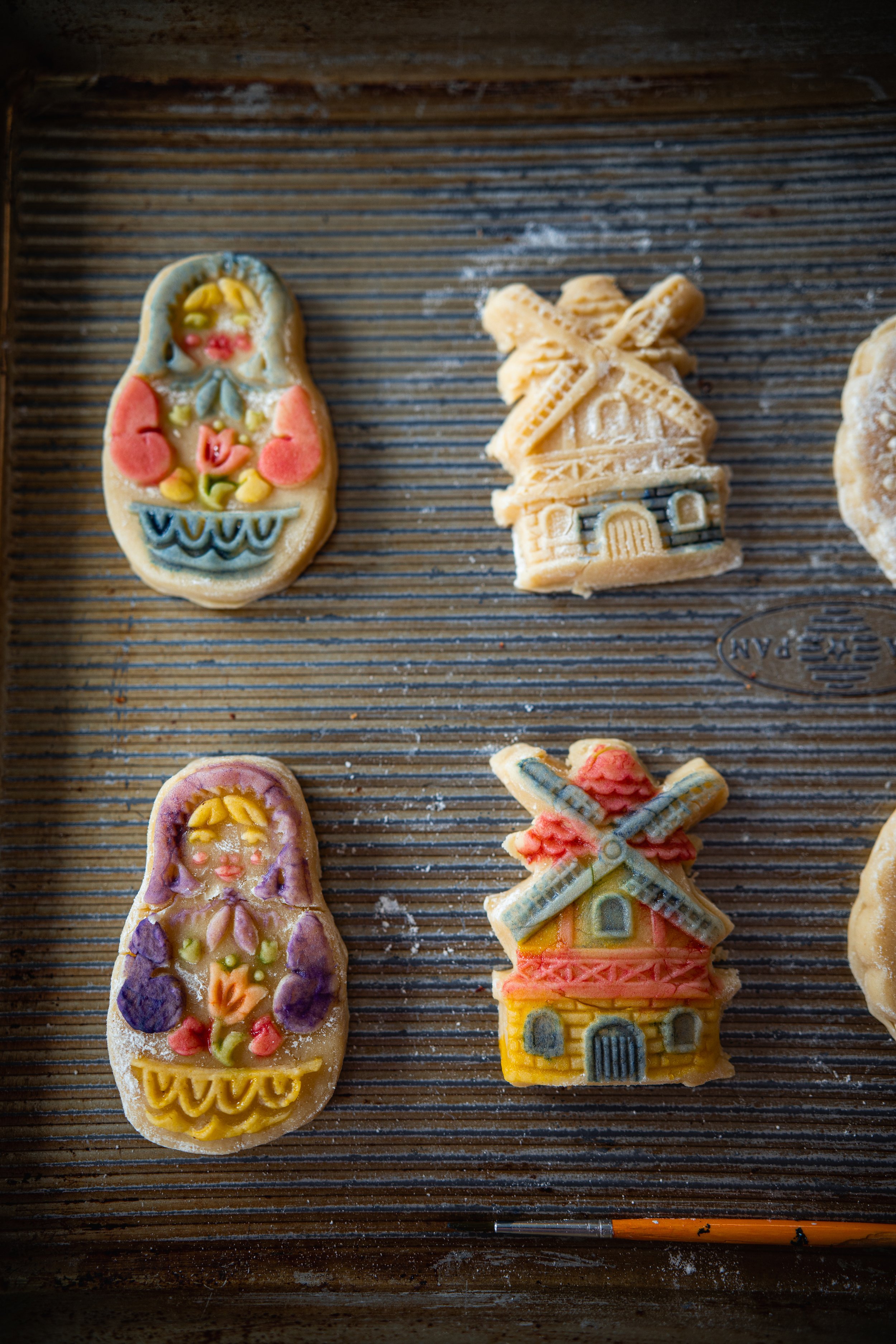
Sweet Traditions: The Art of Painting Springerle Cookies
Introduction
Springerle cookies, with their intricate designs and delicate flavors, have been a beloved holiday tradition in Germany for centuries. The process of painting these cookies is a true art form, requiring patience, skill, and a keen eye for detail. In this comprehensive guide, we will delve into the sweet traditions of painting Springerle cookies, exploring the techniques, tools, and ingredients that make these edible masterpieces come to life.
Preparing the Springerle Dough
The foundation of a perfect Springerle cookie lies in the dough. Traditionally made with flour, sugar, eggs, and anise seeds, the dough must be carefully mixed and kneaded until it reaches a smooth, pliable consistency. The dough is then rolled out to a thickness of about 1/4 inch and cut into desired shapes using Springerle molds.
Creating the Intricate Designs
Once the cookies have been cut, the fun begins. Using a fine brush and food-grade paint, artists carefully trace the intricate designs pressed into the dough by the Springerle molds. The paint, typically made from a mixture of powdered sugar, water, and food coloring, is applied in thin, even strokes to highlight the details of the design.
Tools of the Trade
The tools used for painting Springerle cookies are as important as the paint itself. A high-quality brush with a fine point is essential for precise application. A palette or mixing dish is used to hold the paint and create custom colors. A magnifying glass can be helpful for intricate designs, allowing artists to see the details clearly.
Choosing the Right Colors
The choice of colors for painting Springerle cookies is a matter of personal preference. Traditional colors include white, gold, and silver, but modern artists often experiment with a wide range of hues. Food-grade paints are essential to ensure the safety of the cookies.
Drying and Finishing
Once the cookies have been painted, they must be allowed to dry completely before they can be enjoyed. This process can take several hours or even overnight. To prevent smudging, the cookies should be placed on a wire rack or parchment paper to allow air to circulate around them.
Tips for Success
- Use a high-quality paint with a fine point for precise application.
- Mix the paint to the desired consistency, avoiding too much water or too little.
- Apply the paint in thin, even strokes, highlighting the details of the design.
- Allow the cookies to dry completely before handling them to prevent smudging.
- Store the cookies in an airtight container to preserve their freshness and prevent the paint from fading.
Conclusion
Painting Springerle cookies is a delightful and rewarding tradition that can bring joy to both the artist and the recipient. By following these techniques and tips, you can create edible masterpieces that will be cherished for years to come. Whether you are a seasoned Springerle painter or just starting out, we encourage you to embrace the sweet traditions of this culinary art form and create your own unique and beautiful cookies.
Post a Comment for "Sweet Traditions: Painting Springerle Cookies"