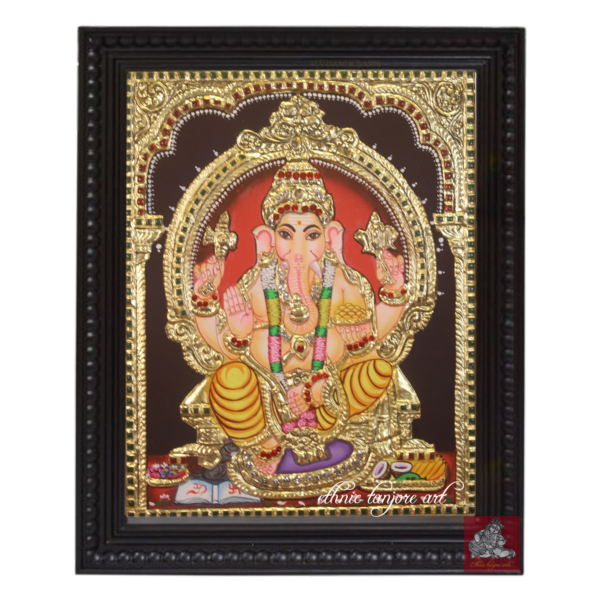
Ganesha’s Grace: Unveiling the Divine Essence in Tanjore Paintings
Introduction
In the pantheon of Hindu deities, Ganesha, the elephant-headed god, holds a revered position as the remover of obstacles and the bestower of wisdom. His iconic form, adorned with an elephant’s head, potbelly, and four arms, has been immortalized in countless works of art throughout history. Among the most exquisite and captivating representations of Ganesha are the Tanjore paintings, a unique style that originated in the Tanjore region of South India.
The Origin and Significance of Tanjore Paintings
Tanjore paintings emerged during the Maratha period in the 17th century. They were commissioned by wealthy patrons, including the Maratha rulers, to adorn temples and palaces. The paintings typically depict religious themes, with Ganesha being a particularly popular subject. The intricate detailing, vibrant colors, and use of gold leaf in Tanjore paintings create a sense of opulence and grandeur.
The Iconography of Ganesha in Tanjore Paintings
Tanjore paintings of Ganesha typically adhere to a specific iconography. The god is often depicted seated in a lotus position, with his four arms holding various attributes. The upper right hand holds a goad, symbolizing the removal of obstacles. The upper left hand holds a noose, representing the capture of obstacles. The lower right hand holds a bowl of sweets, known as modak, representing the fulfillment of desires. The lower left hand holds a lotus flower, symbolizing wisdom and purity.
The Artistic Techniques of Tanjore Paintings
Tanjore paintings are renowned for their intricate craftsmanship and meticulous attention to detail. The process begins with the preparation of a canvas made from a mixture of cotton and jute. The canvas is then coated with a layer of gesso, a white pigment that provides a smooth surface for painting. The outlines of the figures are drawn using a brush dipped in a mixture of charcoal and water.
The colors used in Tanjore paintings are derived from natural sources, such as minerals and plant extracts. The vibrant hues are achieved through a process of layering and blending. Gold leaf is often used to embellish the figures, adding to the opulence and grandeur of the paintings.
The Spiritual Significance of Tanjore Paintings
Beyond their aesthetic beauty, Tanjore paintings of Ganesha hold deep spiritual significance. They are believed to bring good fortune, prosperity, and protection to those who possess them. The presence of Ganesha in the home is said to remove obstacles, clear the path to success, and bestow wisdom and knowledge.
Preservation and Revival of Tanjore Paintings
Tanjore paintings have been passed down through generations, becoming a cherished part of Indian cultural heritage. However, the tradition of Tanjore painting declined in the 19th century due to the rise of Western art styles. In recent years, there has been a renewed interest in preserving and reviving this unique art form.
Conclusion
Ganesha’s Grace: Tanjore Paintings are a testament to the enduring power of Indian art and spirituality. Their intricate detailing, vibrant colors, and use of gold leaf create a sense of opulence and grandeur that is both captivating and awe-inspiring. Whether displayed in temples, palaces, or homes, Tanjore paintings of Ganesha continue to inspire devotion, bring good fortune, and bestow wisdom upon those who behold them.
Additional Information
Table of Prices for Tanjore Paintings of Ganesha
| Size | Price |
|---|---|
| 12" x 18" | $500 |
| 18" x 24" | $750 |
| 24" x 36" | $1,000 |
| 36" x 48" | $1,500 |
| 48" x 60" | $2,000 |
Recommended Diagram
[Image of a Tanjore painting of Ganesha]
Subtitles
- The Divine Essence of Ganesha
- The Origin and Significance of Tanjore Paintings
- The Iconography of Ganesha in Tanjore Paintings
- The Artistic Techniques of Tanjore Paintings
- The Spiritual Significance of Tanjore Paintings
- Preservation and Revival of Tanjore Paintings
Post a Comment for "Ganesha's Grace: Ganesha Tanjore Painting"