Unveiling the Enchantment of Russian Impressionism: A Journey Through Light, Color, and Emotion
Table of Content
- 1 Unveiling the Enchantment of Russian Impressionism: A Journey Through Light, Color, and Emotion
- 1.1 The Genesis of a Movement: A Fusion of Influences
- 1.2 Key Figures: Shaping the Landscape of Russian Impressionism
- 1.3 The Distinctive Features of Russian Impressionism: Beyond the Surface
- 1.4 The Enduring Legacy of Russian Impressionism: A Legacy of Artistic Innovation
- 1.5 Appreciating Russian Impressionism: A Journey of Discovery
Russian Impressionism, a vibrant and captivating movement that emerged in the late 19th and early 20th centuries, stands as a testament to the artistic spirit of its time. While often overshadowed by its French counterpart, Russian Impressionism possesses a unique character, shaped by the country’s cultural landscape and the artistic sensibilities of its pioneers. This exploration delves into the captivating world of Russian Impressionism, revealing its distinct features, influential artists, and enduring legacy.
The Genesis of a Movement: A Fusion of Influences
Russian Impressionism did not emerge in isolation. It was a product of a confluence of artistic currents, drawing inspiration from both Western European movements and the unique artistic traditions of Russia.
1. The Impact of French Impressionism: The influence of French Impressionism, with its emphasis on capturing fleeting moments, light, and color, was undeniably significant. Artists like Claude Monet, Pierre-Auguste Renoir, and Edgar Degas served as crucial inspirations for the nascent Russian movement. However, Russian artists did not merely imitate their French counterparts. They infused their work with a distinctly Russian sensibility, incorporating themes and motifs that reflected their own cultural context.
2. The Role of Realism and Symbolism: Russian Impressionism also drew upon the traditions of Realism and Symbolism, which were prominent in Russian art during the 19th century. Realism, with its focus on depicting everyday life and social realities, provided a grounding for the movement’s portrayal of the human condition. Symbolism, with its emphasis on conveying emotions and ideas through symbolic imagery, added a layer of depth and ambiguity to Impressionist works.
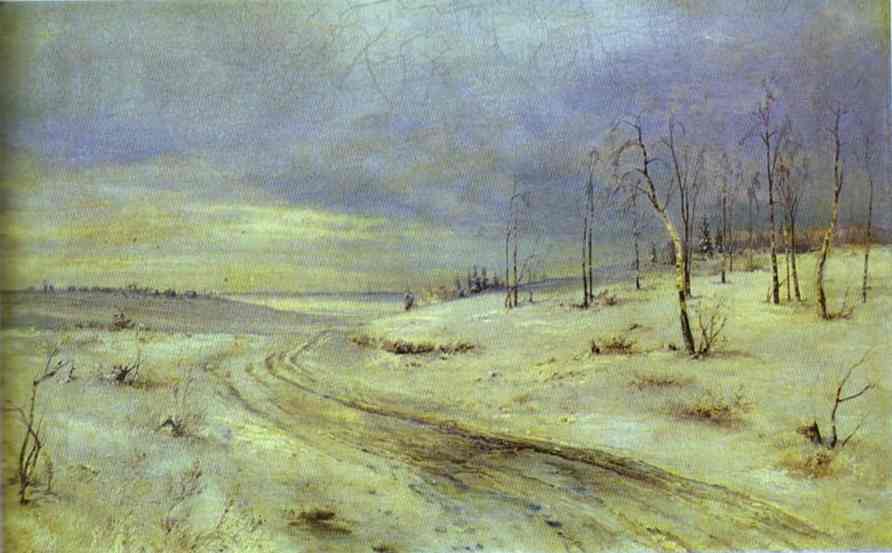
3. The Influence of Russian Landscape and Culture: The vast and diverse landscapes of Russia, from the rolling steppes to the snow-covered forests, provided a rich source of inspiration for Russian Impressionist painters. They captured the beauty and serenity of nature, often infusing their works with a sense of melancholy or longing, reflecting the introspective spirit of Russian culture.
Key Figures: Shaping the Landscape of Russian Impressionism
A constellation of talented artists emerged as the torchbearers of Russian Impressionism, each contributing their unique vision and style to the movement’s evolution.
1. Isaac Levitan (1860-1900): Widely regarded as the "master of Russian landscape," Levitan’s paintings exude a profound sense of solitude and contemplation. His works, often featuring serene lakes, misty forests, and melancholic skies, evoke a deep emotional connection with the natural world. Levitan’s masterpiece, "Golden Autumn" (1895), stands as an iconic representation of Russian Impressionism, capturing the fleeting beauty of the season with exquisite detail and vibrant colors.
2. Valentin Serov (1865-1911): A versatile artist known for his portraits, landscapes, and genre scenes, Serov possessed a remarkable ability to capture the essence of his subjects. His portraits, often characterized by their realism and psychological depth, became synonymous with the "Silver Age" of Russian art. "Girl with Peaches" (1887), a portrait of his niece Vera Mamontova, exemplifies Serov’s mastery of light and shadow, creating a sense of intimacy and warmth.
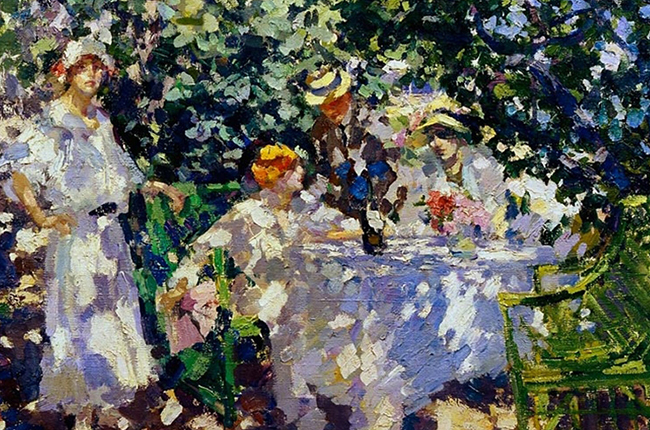
3. Konstantin Korovin (1861-1939): Korovin, known for his vibrant and theatrical works, was a master of color and composition. He frequently depicted scenes from Parisian life, capturing the energy and excitement of the city’s streets and theaters. His use of bold strokes and contrasting colors adds a dynamic and almost kinetic quality to his paintings, making them both visually stimulating and emotionally engaging.
4. Leon Bakst (1866-1924): Bakst, a prominent figure in the world of art and theater, was renowned for his imaginative and decorative style. His paintings, often characterized by their opulent colors and fantastical imagery, were deeply influenced by Russian folklore and mythology. Bakst’s work went beyond the canvas, influencing the design of stage sets and costumes for the Ballets Russes, a groundbreaking dance company that brought Russian art to the international stage.
5. Boris Kustodiev (1878-1927): Kustodiev’s paintings often depicted scenes from Russian life, capturing the warmth, humor, and vitality of everyday existence. His works are characterized by their robust forms, bold colors, and a sense of joyful exuberance. Kustodiev’s iconic painting, "Merchant’s Wife with Tea" (1918), exemplifies his ability to portray the richness and vibrancy of Russian culture.
The Distinctive Features of Russian Impressionism: Beyond the Surface
While Russian Impressionism shares some commonalities with its French counterpart, it also possesses distinct features that set it apart.

1. The Emphasis on Emotion and Symbolism: Russian Impressionism goes beyond simply capturing the fleeting moment. It delves into the emotional depths of the human experience, using symbolism and subtle cues to convey a sense of longing, melancholy, or introspection. This focus on the emotional dimension distinguishes Russian Impressionism from the more objective approach of its French counterpart.
2. The Influence of Russian Culture and History: The works of Russian Impressionist artists are deeply rooted in their cultural heritage, reflecting the unique traditions, beliefs, and historical experiences of Russia. They incorporate themes and motifs from Russian folklore, literature, and mythology, adding a layer of depth and meaning to their paintings.
3. The Use of Color and Light: While Russian Impressionists embraced the use of color and light, their palettes often differed from those of their French counterparts. They favored a more muted and subdued palette, reflecting the often somber and introspective nature of Russian culture. Their use of light, however, could be just as dramatic and evocative, creating a sense of depth and atmosphere in their works.
4. The Importance of Landscape: Landscape played a crucial role in Russian Impressionism, serving as a reflection of the human condition and a source of spiritual inspiration. Artists like Levitan and Serov captured the vastness and beauty of the Russian countryside, often imbuing their works with a sense of solitude, contemplation, and a connection to the natural world.
The Enduring Legacy of Russian Impressionism: A Legacy of Artistic Innovation

Russian Impressionism left an indelible mark on the art world, influencing generations of artists and shaping the artistic landscape of Russia.
1. A Catalyst for Artistic Innovation: Russian Impressionism served as a catalyst for artistic innovation in Russia, breaking away from the traditional academic style and paving the way for new forms of artistic expression. It fostered a spirit of experimentation and exploration, encouraging artists to embrace their own unique voices and perspectives.
2. A Reflection of National Identity: Russian Impressionism played a vital role in shaping a sense of national identity through art. By depicting the unique landscapes, culture, and spirit of Russia, these artists helped to define a distinct artistic tradition that resonated with the nation’s soul.
3. A Global Influence: The impact of Russian Impressionism extended beyond Russia’s borders, influencing artists around the world. The movement’s emphasis on emotion, symbolism, and the exploration of national identity resonated with artists in other countries, contributing to the development of new artistic movements and styles.
Appreciating Russian Impressionism: A Journey of Discovery
To truly appreciate the beauty and depth of Russian Impressionism, it is essential to engage with the works of these artists on a personal level. Visit museums and galleries, immerse yourself in their paintings, and allow yourself to be transported to the world they created. Pay attention to the subtle nuances of color, light, and composition, and consider the emotional and symbolic dimensions of their works. By taking this journey of discovery, you will gain a deeper understanding of this captivating movement and its enduring legacy.
Further Exploration:
- Museums and Galleries: The State Tretyakov Gallery in Moscow, the Russian Museum in St. Petersburg, and the Hermitage Museum in St. Petersburg all house significant collections of Russian Impressionist art.
- Online Resources: Websites such as the Tretyakov Gallery’s online collection and the Russian Museum’s website offer a wealth of information and images of Russian Impressionist paintings.
- Books and Articles: Numerous books and articles have been written about Russian Impressionism, providing in-depth analysis and historical context.
In conclusion, Russian Impressionism stands as a testament to the artistic spirit of Russia, capturing the essence of its culture, landscape, and people. By exploring the works of these talented artists, we can gain a deeper appreciation for the unique beauty and emotional depth of this captivating movement.
Unveiling the Enchantment of Russian Impressionism: A Journey Through Light, Color, and Emotion
Post a Comment for "Appreciating Russian Impressionist Paintings"