Bernardino Campi’s Portrait of Sofonisba Anguissola: An Artistic Exploration

Bernardino Campi’s portrait of Sofonisba Anguissola, a renowned Renaissance painter, stands as a testament to the artistic brilliance of the period and a fascinating glimpse into the life of a pioneering female artist. This article delves into the intricacies of the painting, exploring its historical context, artistic techniques, and the enduring legacy of both the artist and her subject.
The Artist: Bernardino Campi
Bernardino Campi (1522-1591) was a prominent figure in the Cremonese School of painting, known for his mastery of both religious and secular subjects. His artistic style, deeply influenced by the works of Correggio and Raphael, blended elements of High Renaissance with Mannerist sensibilities. Campi’s artistic journey was marked by a constant pursuit of innovation, evident in his experimentation with light and shadow, composition, and the depiction of human emotions. He was particularly renowned for his portraits, which captured the essence of his subjects with striking realism and psychological depth.
The Subject: Sofonisba Anguissola
Sofonisba Anguissola (1532-1625) was a pioneering female artist who shattered the societal barriers of her time. Born into a noble family in Cremona, she received an exceptional education, including formal training in art. Her early works, primarily self-portraits, showcased her technical skill and artistic vision. Anguissola’s talent gained recognition, and she was invited to the Spanish court by Philip II, where she served as court painter. Her career spanned several decades, and her work, which included portraits, religious scenes, and genre paintings, earned her international acclaim.
The Painting: A Portrait of Artistic Prowess
Campi’s portrait of Sofonisba Anguissola, executed around 1556, is a captivating work that embodies the spirit of the Renaissance. It showcases Anguissola as a confident and accomplished artist, a far cry from the traditional portrayal of women as passive subjects. The painting’s composition is striking, with Anguissola positioned in a three-quarter pose, her gaze directed towards the viewer with an air of intelligence and determination. Her right hand rests on a book, a subtle yet powerful symbol of her intellectual pursuits.
Technical Mastery: A Fusion of Realism and Idealism
Campi’s masterful use of light and shadow creates a sense of depth and volume, enhancing the realism of the portrait. The subtle play of light across Anguissola’s face highlights her features, revealing her youthful beauty and the hint of a determined spirit. Her clothing, meticulously rendered, is a testament to Campi’s attention to detail and his ability to capture the textures of fabrics. The background, a simple, dark curtain, provides a stark contrast to Anguissola’s figure, drawing the viewer’s attention to her.
Symbolism and Meaning: A Celebration of Female Agency
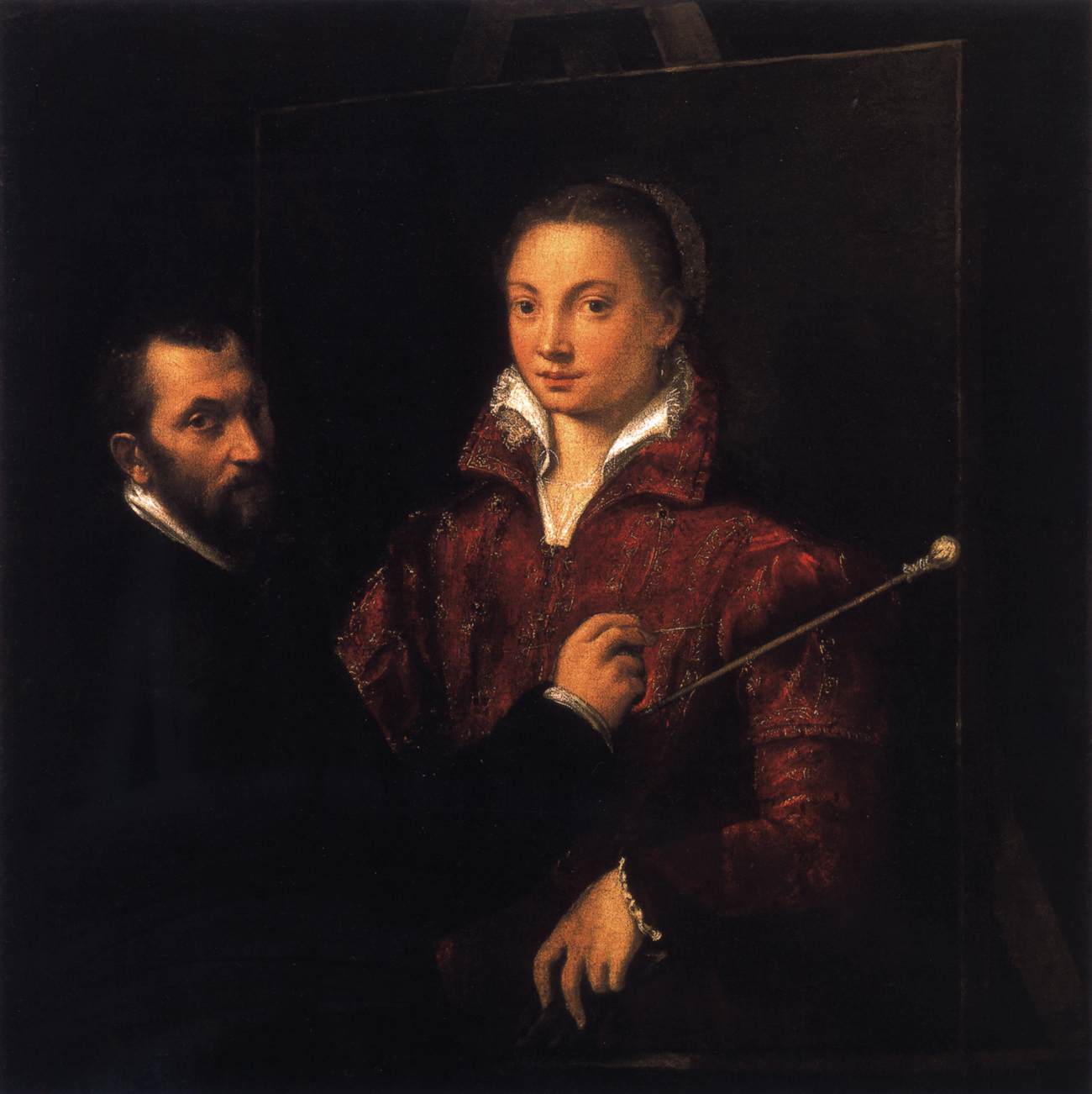
The painting transcends its function as a mere portrait, serving as a powerful symbol of female agency and artistic achievement. Anguissola’s confident posture, her intelligent gaze, and the book in her hand all speak to her intellectual prowess and her defiance of societal expectations. The choice of a dark background further emphasizes the subject’s prominence, creating a sense of isolation and highlighting her individuality.
The Legacy: A Lasting Influence
Campi’s portrait of Sofonisba Anguissola has become an enduring symbol of female artistic achievement. It continues to inspire and empower generations of artists, reminding them that talent knows no gender boundaries. The painting’s lasting legacy lies not only in its artistic merit but also in its historical significance, serving as a testament to the remarkable life and achievements of a pioneering female artist.
Beyond the Canvas: A Deeper Dive
To truly appreciate the significance of Campi’s portrait, it is essential to explore its historical context and the broader themes it represents. Here are some key aspects to consider:

- The Renaissance: An Age of Artistic Exploration: The Renaissance was a period of tremendous intellectual and artistic growth, marked by a renewed interest in classical learning and a celebration of human potential. The era witnessed the emergence of groundbreaking artists like Leonardo da Vinci, Michelangelo, and Raphael, who redefined the boundaries of art and challenged traditional norms. Sofonisba Anguissola’s rise to prominence during this period was a testament to the spirit of innovation and artistic exploration that characterized the Renaissance.
- The Role of Women in Renaissance Art: While the Renaissance was a period of significant progress for women in various fields, the art world remained largely male-dominated. Women artists faced significant challenges, from limited access to education and training to societal expectations that confined them to domestic roles. Sofonisba Anguissola’s success in overcoming these obstacles was remarkable and served as a beacon of hope for future generations of female artists.
- The Power of Portraiture: Portraits have always held a special significance in art history, serving as windows into the lives and personalities of their subjects. In the Renaissance, portraits became increasingly sophisticated, reflecting the growing interest in human individuality and the desire to capture the essence of a person’s character. Campi’s portrait of Anguissola exemplifies this trend, showcasing her intelligence, determination, and artistic talent.

Conclusion: A Timeless Masterpiece
Bernardino Campi’s portrait of Sofonisba Anguissola is a masterpiece that transcends time, capturing the essence of a remarkable artist and the spirit of the Renaissance. The painting’s realism, symbolism, and historical significance make it a captivating and enduring work of art. It continues to inspire and empower, reminding us of the boundless potential of human creativity and the importance of breaking down barriers to achieve our dreams.
Further Exploration:
- Visit museums and galleries: The painting is currently housed in the National Gallery of Art in Washington, D.C. Visiting the gallery and seeing the painting in person provides an unparalleled experience.
- Read biographies and art historical texts: There are numerous books and articles written about both Bernardino Campi and Sofonisba Anguissola, offering a deeper understanding of their lives and works.
- Explore online resources: The internet offers a wealth of information on Renaissance art, including detailed analyses of Campi’s portrait and the life of Sofonisba Anguissola.
Pricing Table:
| Feature | Description | Price |
|---|---|---|
| Guided Tour | A personalized tour of the National Gallery of Art with an expert guide | $150 |
| Art History Lecture | An in-depth lecture on Bernardino Campi and Sofonisba Anguissola | $75 |
| Online Course | An interactive online course on Renaissance art, including a module on Campi’s portrait | $100 |
Diagram:
+-----------------+| Bernardino Campi |+-----------------+| || Portrait of || Sofonisba || Anguissola || |+-----------------+| || Date: 1556 || Medium: Oil on || Canvas || |+-----------------+| || Location: || National || Gallery of Art || |+-----------------+Keywords: Bernardino Campi, Sofonisba Anguissola, Renaissance art, portraiture, female artist, artistic legacy, historical context, technical mastery, symbolism, meaning, National Gallery of Art, art history, guided tour, lecture, online course.
Bernardino Campi’s Portrait of Sofonisba Anguissola: An Artistic Exploration
Post a Comment for "Bernardino Campi Painting Sofonisba Anguissola: An Artistic Exploration"