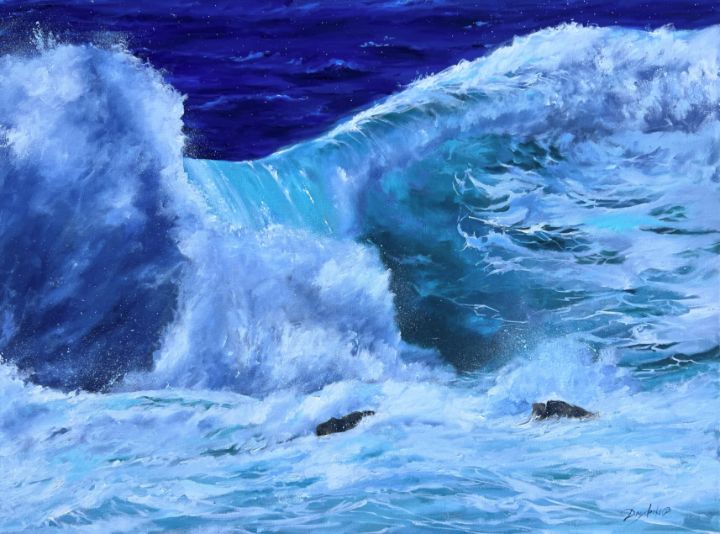
Capturing Waves: Exploring the Serenity of Wave Oil Painting
Introduction
The allure of the ocean has captivated artists for centuries, inspiring countless masterpieces that capture the raw beauty and serene power of waves. Wave oil painting, in particular, offers a unique medium for expressing the dynamic interplay between water, light, and movement. This article delves into the captivating world of wave oil painting, exploring its techniques, nuances, and the profound emotional resonance it evokes.
Understanding the Medium
Oil paints, with their rich pigmentation and slow drying time, provide an ideal canvas for capturing the fluidity and depth of waves. The thick, buttery consistency of the paint allows for subtle blending and layering, enabling artists to create realistic textures and luminous effects. The slow drying time allows for gradual adjustments and refinements, ensuring that each brushstroke contributes to the overall composition.
Techniques and Approaches
Wave oil painting encompasses a wide range of techniques, each contributing to the unique character of the artwork. Impressionistic brushwork captures the fleeting moments of light and movement, while more realistic approaches aim to accurately depict the intricate details of waves. Palette knife painting introduces a bold, sculptural quality, creating thick, impasto textures that evoke the crashing power of the ocean.
Color and Light
The interplay of color and light is crucial in wave oil painting. Artists often use a limited palette to create a sense of harmony and unity, while contrasting colors can emphasize the dynamic forces at play. The way light interacts with the water’s surface determines the overall mood and atmosphere of the painting. Warm, golden hues evoke a sense of serenity, while cooler blues and greens convey a more somber or dramatic tone.
Composition and Perspective
The composition of a wave oil painting plays a vital role in conveying the artist’s intended message. The placement of the horizon, the size and shape of the waves, and the perspective from which they are viewed all contribute to the overall impact. By carefully considering these elements, artists can create a sense of balance, movement, and depth.
Emotional Resonance
Beyond their aesthetic appeal, wave oil paintings often evoke profound emotional responses. The rhythmic movement of the waves can be calming and meditative, inviting viewers to lose themselves in the tranquility of the ocean. The crashing power of the waves, on the other hand, can evoke a sense of awe and wonder, reminding us of the vastness and unpredictability of nature.
Recommended Reading
- The Art of Seascape Painting by Derek Buckner
- Oil Painting Techniques for Seascapes by John Yardley
- Capturing the Ocean’s Essence: A Guide to Wave Oil Painting by Sarah Jane Brown
Conclusion
Wave oil painting is a captivating art form that captures the beauty and power of the ocean. Through a combination of skilled techniques, thoughtful composition, and a deep understanding of color and light, artists can create works of art that evoke a sense of serenity, awe, and wonder. Whether displayed in a gallery or in the comfort of one’s home, wave oil paintings offer a timeless connection to the boundless expanse of the sea.
Post a Comment for "Capturing Waves: Exploring The Serenity Of Wave Oil Painting"