Abstract Nativity Painting: Modern Takes on a Classic Theme

Table of Content
The Nativity, a cornerstone of Christian faith, has inspired countless artistic interpretations throughout history. While traditional depictions often feature a stable setting with the Virgin Mary, Joseph, and the newborn Jesus, contemporary artists have embraced abstraction to explore this timeless theme in new and thought-provoking ways. This exploration of abstract nativity painting delves into the diverse approaches and interpretations that artists have employed to convey the profound meaning of this pivotal event.
Beyond the Literal: Embracing Abstraction in Nativity Art
Abstract art, characterized by its departure from representational imagery, offers artists a unique platform to transcend literal interpretations and delve into the essence of the Nativity story. By employing non-representational forms, colors, and textures, artists can evoke emotions, spiritual experiences, and the profound significance of the event without relying on traditional iconography.
Exploring the Spiritual Core:
Abstract nativity paintings often prioritize the spiritual core of the story, focusing on themes of light, hope, and divine presence. Artists utilize color symbolism, geometric forms, and dynamic compositions to convey these abstract concepts. For example, vibrant hues of gold and red might represent divine light and the sacrifice of Christ, while swirling lines and organic shapes could symbolize the spiritual energy emanating from the event.
Key Elements of Abstract Nativity Art:
- Color Symbolism: Artists employ color symbolism to convey the spiritual and emotional aspects of the Nativity. Deep blues often represent the night sky, while golden hues symbolize divine light and the presence of God.
- Geometric Forms: Geometric shapes, such as circles, triangles, and squares, can represent the divine order, the unity of the Trinity, or the sacred space of the Nativity scene.
- Dynamic Compositions: Abstract compositions often utilize dynamic lines, swirling forms, and contrasting colors to create a sense of movement, energy, and spiritual awakening.
- Texture and Material: Artists may experiment with various textures and materials, such as impasto, collage, or mixed media, to add depth, dimension, and a tactile experience to their abstract interpretations.
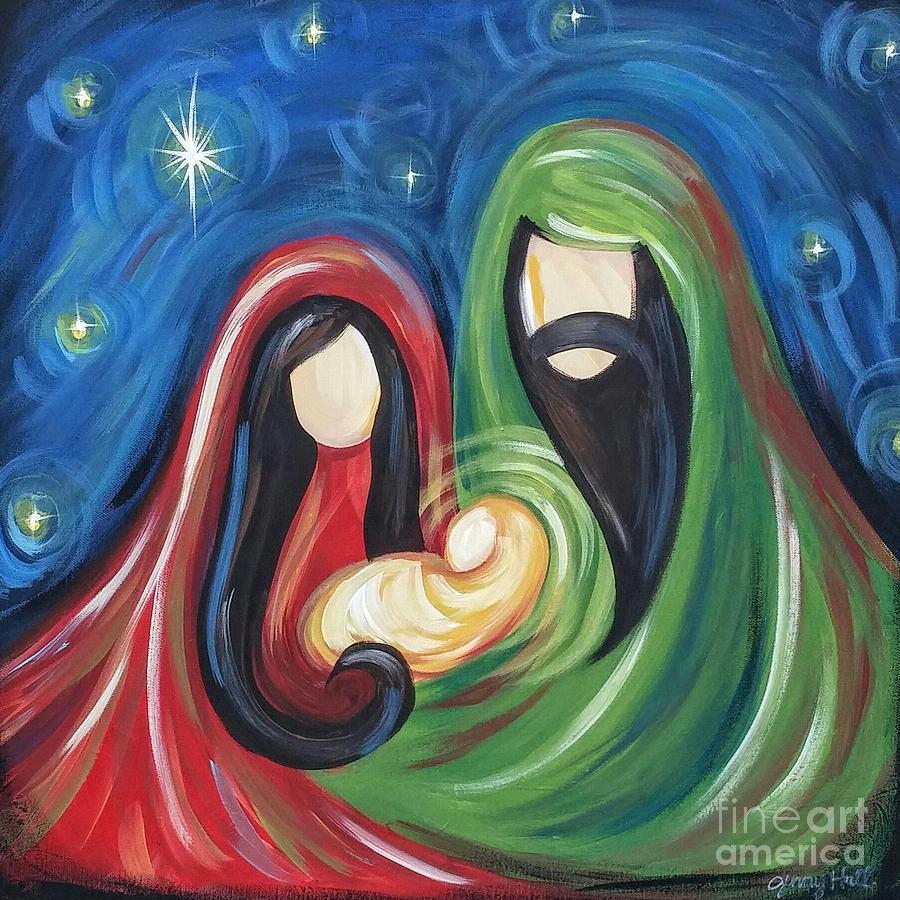
Notable Abstract Nativity Artists and Their Interpretations:
1. Wassily Kandinsky (1866-1944): Kandinsky, a pioneer of abstract art, explored the spiritual significance of the Nativity through his use of color and form. His paintings, such as "Composition VIII," feature vibrant hues and dynamic compositions that evoke a sense of divine presence and spiritual awakening.
2. Mark Rothko (1903-1970): Rothko’s minimalist color field paintings, characterized by large blocks of color separated by thin black lines, have been interpreted as representations of the divine. His "Black on Maroon" series, with its somber yet powerful presence, evokes a sense of contemplation and the profound mystery of the Nativity.

3. Agnes Martin (1912-2004): Martin’s minimalist paintings, characterized by subtle variations in color and texture, create a sense of tranquility and contemplation. Her works, such as "The Light in the East," have been interpreted as representations of the divine light emanating from the Nativity scene.
4. Hilma af Klint (1862-1944): Af Klint, a Swedish artist, created abstract paintings inspired by spiritual experiences and her exploration of theosophy. Her "The Ten Largest" series, featuring geometric forms and vibrant colors, has been interpreted as a representation of the divine and the spiritual world.
5. Contemporary Artists: Today, contemporary artists continue to explore the Nativity theme through abstraction. Artists like Julie Mehretu, Kara Walker, and David Shrigley employ diverse mediums and styles to create unique and thought-provoking interpretations of the Nativity story.
Beyond the Canvas: Exploring Abstract Nativity in Other Art Forms
The abstract exploration of the Nativity extends beyond painting. Sculptural installations, mixed media works, and even performance art have all been employed to create unique interpretations of this timeless theme.

Sculptural Installations:
Artists like Anish Kapoor and Louise Bourgeois have created monumental sculptures that evoke the spiritual and emotional weight of the Nativity. Kapoor’s "Cloud Gate" in Chicago, with its reflective surface and organic form, can be seen as a representation of the divine presence, while Bourgeois’s "Maman" spider sculptures, with their protective and nurturing qualities, evoke the maternal aspect of the Nativity.
Mixed Media Works:
Mixed media artists like Robert Rauschenberg and Jasper Johns have incorporated found objects, everyday materials, and unconventional techniques into their Nativity-inspired works. Rauschenberg’s "Combines" series, which blended painting, sculpture, and collage, often incorporated religious imagery alongside everyday objects, challenging traditional representations of the Nativity.
Performance Art:
Performance artists like Marina Abramović and Yoko Ono have used their bodies and actions to explore the spiritual and emotional aspects of the Nativity. Abramović’s "The Artist Is Present" performance, in which she sat motionless for three months, invited viewers to contemplate the nature of presence and the divine.
The Power of Abstraction in Nativity Art:
Abstract nativity art transcends the limitations of literal representation, allowing artists to explore the profound meaning of the story on a deeper level. By employing non-representational forms, colors, and textures, artists can evoke emotions, spiritual experiences, and the profound significance of the event in a way that resonates with viewers on a personal and spiritual level.
Conclusion:
The Nativity story, with its enduring message of hope, love, and redemption, continues to inspire artists of all eras. Abstract interpretations of this timeless theme offer a unique perspective, allowing viewers to engage with the story on a deeper level and explore its profound meaning through the lens of contemporary art. From the vibrant colors and dynamic compositions of Kandinsky to the minimalist forms and textures of Martin, abstract nativity art offers a diverse and thought-provoking exploration of this pivotal event in Christian history.

Abstract Nativity Painting: Modern Takes on a Classic Theme
Post a Comment for "Abstract Nativity Painting: Modern Takes On A Classic Theme"