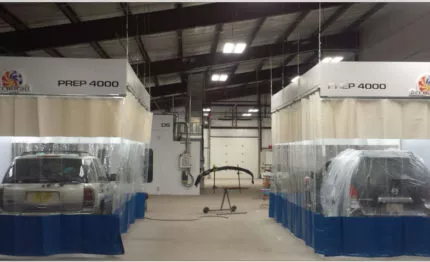
Behind the Booth: Exploring the World of Paint Booth Curtains
Paint booth curtains play a crucial role in maintaining a clean and efficient paint booth environment. These curtains act as a physical barrier, preventing overspray, dust, and other contaminants from escaping the booth. Understanding the different types, materials, and applications of paint booth curtains is essential for businesses looking to optimize their painting operations.
Types of Paint Booth Curtains
There are two primary types of paint booth curtains:
- Vertical Curtains: These curtains hang vertically from the ceiling and extend to the floor, creating a complete enclosure around the booth. They are typically made of durable materials like vinyl or canvas and can be easily rolled up or down as needed.
- Horizontal Curtains: These curtains hang horizontally from the ceiling and overlap slightly, forming a seal that prevents overspray from escaping. They are often used in conjunction with vertical curtains to provide additional protection.
Materials for Paint Booth Curtains
The choice of material for paint booth curtains depends on the specific application and environmental conditions. Common materials include:
- Vinyl: Vinyl curtains are durable, resistant to chemicals, and easy to clean. They are suitable for most painting applications, including automotive, industrial, and aerospace.
- Canvas: Canvas curtains are flame-retardant, breathable, and provide excellent protection against overspray. They are often used in high-temperature applications, such as powder coating.
- Polyester: Polyester curtains are lightweight, wrinkle-resistant, and offer good resistance to chemicals. They are suitable for general-purpose painting applications.
Applications of Paint Booth Curtains
Paint booth curtains are used in a wide range of industries, including:
- Automotive: Paint booths in automotive repair shops require curtains to prevent overspray from contaminating other vehicles or the surrounding environment.
- Industrial: Industrial paint booths use curtains to protect workers and equipment from hazardous fumes and overspray.
- Aerospace: Paint booths in the aerospace industry require curtains that meet strict fire safety regulations and provide protection against electrostatic discharge.
Benefits of Paint Booth Curtains
- Improved Air Quality: Curtains help to trap overspray, dust, and contaminants, improving air quality within the booth and the surrounding area.
- Reduced Contamination: Curtains create a physical barrier that prevents overspray from contaminating other surfaces or equipment.
- Increased Efficiency: By reducing contamination, curtains help to improve painting efficiency and reduce the need for rework.
- Enhanced Safety: Curtains can help to prevent accidents by reducing the risk of slips and falls due to overspray on the floor.
Selection and Installation of Paint Booth Curtains
When selecting and installing paint booth curtains, consider the following factors:
- Size and Configuration: Curtains should be sized to fit the specific booth dimensions and configuration.
- Material: Choose a material that is suitable for the intended application and environmental conditions.
- Installation: Curtains should be installed securely and properly to ensure they provide optimal protection.
Conclusion
Paint booth curtains are an essential component of any paint booth system. By understanding the different types, materials, and applications of paint booth curtains, businesses can optimize their painting operations, improve air quality, reduce contamination, increase efficiency, and enhance safety.
Post a Comment for "Behind The Booth: Exploring The World Of Paint Booth Curtains"