Marine Touch Up Paint: Keep Your Boat Looking Pristine
Introduction
Maintaining a pristine appearance for your boat is essential for preserving its value, functionality, and aesthetic appeal. Marine touch-up paint plays a crucial role in this endeavor, enabling you to repair scratches, chips, and other imperfections that can detract from your boat’s overall presentation. Choosing the right touch-up paint and applying it correctly are essential for achieving a seamless and professional-looking finish.
Selecting the Right Touch-Up Paint
The first step in effective touch-up painting is selecting the appropriate paint. Here are some key factors to consider:
- Color Match: Ensure the touch-up paint matches the original color of your boat’s hull, deck, or other surfaces. Consult the manufacturer’s specifications or use a color-matching tool to determine the exact shade.
- Type of Paint: Choose a touch-up paint specifically designed for marine applications. These paints are formulated to withstand harsh marine environments, including exposure to saltwater, UV radiation, and temperature fluctuations.
- Finish: Select a touch-up paint that matches the finish of the original paint. Common finishes include gloss, semi-gloss, and matte.
Preparing the Surface
Before applying touch-up paint, it is crucial to prepare the surface properly. This involves:
- Cleaning: Remove any dirt, grime, or salt buildup from the damaged area using a mild detergent and water.
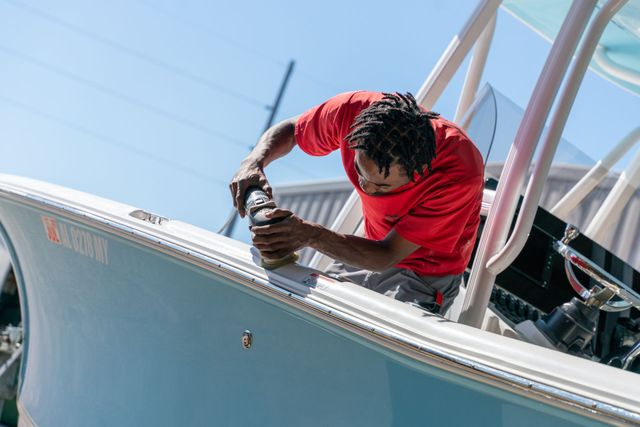
- Sanding: Lightly sand the damaged area with fine-grit sandpaper to smooth out any rough edges and create a surface for the paint to adhere to.
- Masking: Use masking tape to protect surrounding areas from paint overspray.
Applying Touch-Up Paint
Once the surface is prepared, follow these steps to apply touch-up paint:
- Stir the Paint: Stir the touch-up paint thoroughly to ensure an even consistency.
- Use a Small Brush: Apply the paint using a small, fine-tipped brush. This will allow for precise application and minimize paint buildup.
- Apply Thin Coats: Apply multiple thin coats of paint, allowing each coat to dry completely before applying the next. This will prevent runs and sagging.
- Feather the Edges: Blend the edges of the touch-up area into the surrounding paint by lightly sanding or using a blending brush.
Additional Tips
- Use a Primer: For larger or deeper scratches, apply a primer before the touch-up paint to ensure proper adhesion and prevent the paint from peeling.
- Protect the Paint: Once the touch-up paint is dry, apply a protective sealant or wax to protect it from the elements and extend its lifespan.
- Store the Paint Properly: Store the touch-up paint in a cool, dry place away from direct sunlight.
Conclusion
Marine touch-up paint is an essential tool for maintaining the appearance of your boat. By selecting the right paint, preparing the surface properly, and applying it correctly, you can effectively repair scratches and chips, restoring your boat’s pristine condition. Remember to use a high-quality touch-up paint specifically designed for marine applications, and follow the steps outlined above for optimal results.
Post a Comment for "Marine Touch Up Paint: Keep Your Boat Looking Pristine"