Unleashing the Beauty of Landscapes: A Guide to Easy Watercolor Techniques
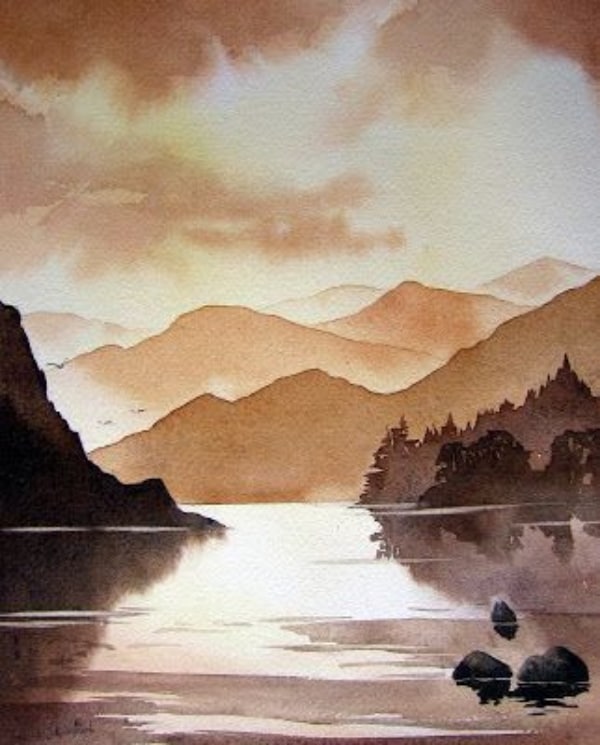
Table of Content
- 1 Unleashing the Beauty of Landscapes: A Guide to Easy Watercolor Techniques
- 1.1 1. Mastering the Wash: A Foundation for Landscape Painting
- 1.2 2. Capturing the Essence of Sky and Atmosphere
- 1.3 3. Bringing Life to Foliage and Trees
- 1.4 4. Mastering Mountains and Rocks
- 1.5 5. Adding Depth and Perspective
- 1.6 6. Enhancing Your Landscape with Details
- 1.7 7. Experimenting with Different Watercolor Techniques
- 1.8 8. Choosing the Right Watercolor Paper
- 1.9 9. Selecting the Right Watercolor Paints
- 1.10 10. Essential Watercolor Supplies for Landscape Painting
- 1.11 11. Building Confidence through Practice and Experimentation
- 1.12 12. Embracing the Uniqueness of Watercolor
- 1.13 13. Conclusion: Unleashing Your Artistic Vision
Watercolor, with its inherent fluidity and vibrant hues, offers a captivating medium for capturing the essence of landscapes. Its ability to blend seamlessly and create subtle washes makes it ideal for portraying the vastness of skies, the intricate details of foliage, and the rugged textures of mountains. This comprehensive guide will delve into easy watercolor techniques, empowering you to translate your vision onto paper and bring your landscape paintings to life.
1. Mastering the Wash: A Foundation for Landscape Painting
The wash is the cornerstone of watercolor painting, forming the basis for building depth and atmosphere in your landscapes.
1.1. Layering Washes:
- Begin with a light wash of diluted color, allowing it to dry completely before applying subsequent layers.
- Each successive layer should be slightly darker or more intense, gradually building up the desired depth and complexity.
- Use a soft, broad brush for large areas, and a smaller brush for details.
- Remember to blend the edges of each layer seamlessly to avoid harsh lines.

1.2. Wet-on-Wet Technique:
- Apply a wet wash to your paper, then immediately add a different color while the paper is still damp.
- The colors will blend beautifully, creating soft, ethereal transitions.
- This technique is perfect for depicting clouds, misty landscapes, and flowing water.
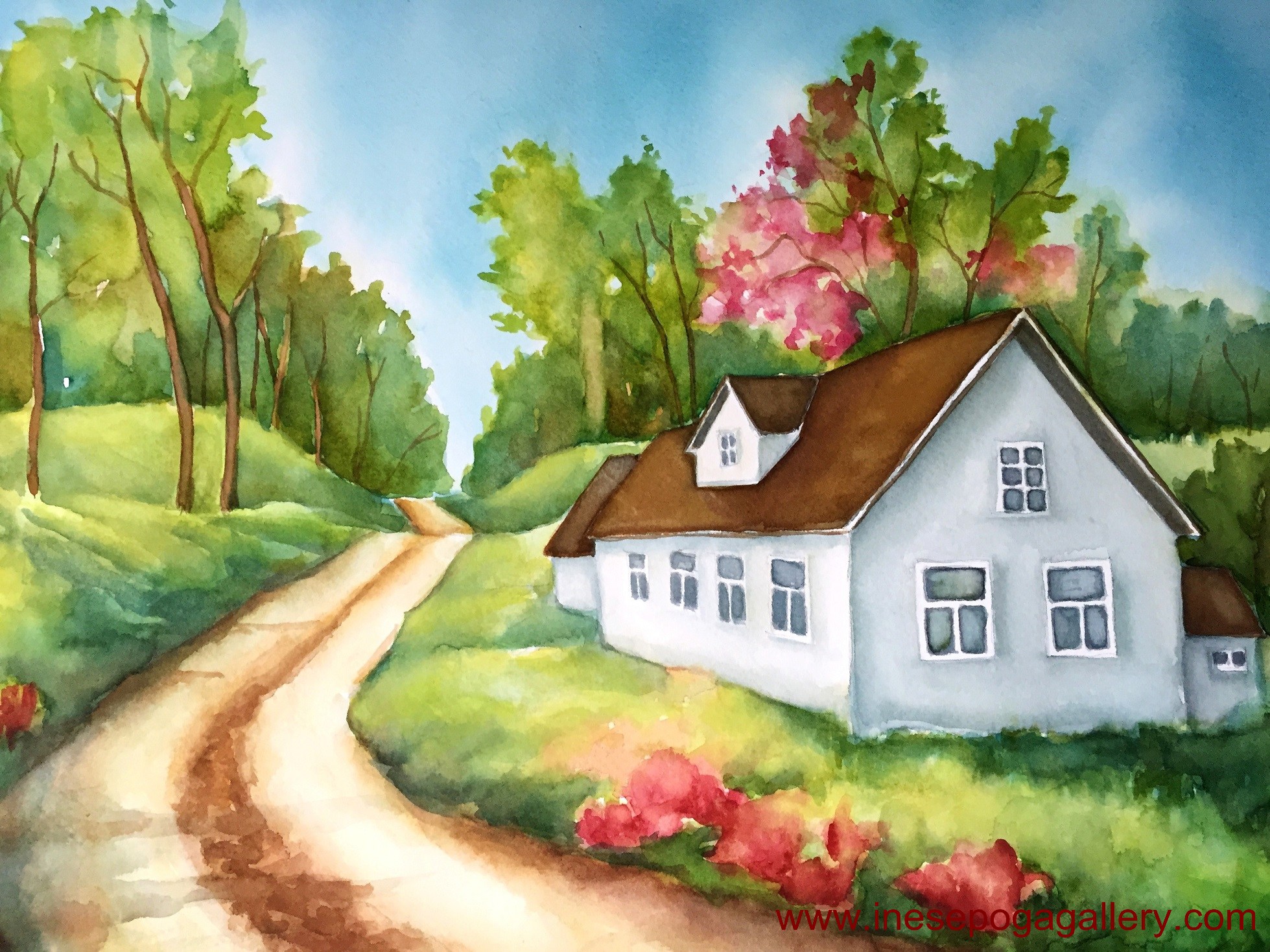
1.3. Dry Brushing:
- Use a dry brush with a minimal amount of paint to create a textured effect.
- This technique is ideal for depicting rough surfaces like rocks, bark, or dry grass.
- The dry brush will leave behind a series of broken lines, adding visual interest and texture.

2. Capturing the Essence of Sky and Atmosphere
The sky serves as the backdrop for your landscape, setting the mood and influencing the overall atmosphere.
2.1. Creating Depth and Dimension:
- Utilize a combination of washes and dry brushing to create the illusion of depth and distance.
- Start with a light wash of blue or grey for the distant sky, gradually darkening the color as you move towards the horizon.
- Incorporate clouds using a variety of techniques, including wet-on-wet, dry brushing, and lifting with a damp brush.
- Experiment with different shades of blue, grey, and even pink or orange for sunset skies.
2.2. Depicting Clouds:
- Clouds are dynamic elements that add life and movement to your landscapes.
- Use a wet-on-wet technique to create soft, fluffy clouds.
- For more dramatic clouds, experiment with dry brushing or lifting techniques.
- Consider the direction of the wind and the overall atmosphere when depicting cloud formations.
3. Bringing Life to Foliage and Trees
Trees and foliage are essential components of most landscapes, adding texture, color, and visual interest.
3.1. Creating Realistic Foliage:
- Use a combination of washes and dry brushing to depict the different textures of leaves.
- Start with a base wash of green, then add highlights and shadows with lighter and darker greens.
- For individual leaves, use a small brush and apply the paint in short, brushstrokes.
- Consider the light source and how it affects the foliage when adding shadows and highlights.
3.2. Painting Trees:
- Start with a rough outline of the tree’s shape.
- Use a combination of washes and dry brushing to build up the texture of the bark.
- Add branches and foliage using a smaller brush, paying attention to the direction of growth.
- Remember to create a sense of depth by layering colors and adding shadows.
4. Mastering Mountains and Rocks
Mountains and rocks add a sense of grandeur and solidity to landscapes, providing a contrast to the softness of skies and foliage.
4.1. Depicting Mountains:
- Use a combination of washes and dry brushing to create the illusion of depth and texture.
- Start with a light wash of blue or grey for the distant mountains, gradually darkening the color as you move towards the foreground.
- Add shadows and highlights to create a sense of form and dimension.
- Use a dry brush to depict the rough texture of the mountainside.
4.2. Painting Rocks:
- Use a dry brush or a stippling technique to create the rough texture of rocks.
- Start with a base wash of grey or brown, then add highlights and shadows with lighter and darker colors.
- Consider the shape and form of the rocks, and how they interact with the surrounding environment.
5. Adding Depth and Perspective
Creating a sense of depth and perspective is crucial for making your landscapes feel realistic and inviting.
5.1. Utilizing Aerial Perspective:
- Utilize aerial perspective by gradually shifting the colors of distant objects towards cooler, bluer tones.
- This technique creates the illusion of distance, making the landscape appear more expansive.
5.2. Employing Linear Perspective:
- Utilize linear perspective by making objects appear smaller as they recede into the distance.
- This technique helps to guide the viewer’s eye through the landscape and create a sense of depth.
5.3. Utilizing Foreground, Midground, and Background:
- Divide your landscape into three distinct areas: foreground, midground, and background.
- Focus on creating a clear separation between these areas, using different colors, textures, and details.
- The foreground should be the most detailed and vibrant, while the background should be more muted and less detailed.
6. Enhancing Your Landscape with Details
Adding details to your landscape paintings can elevate them from simple representations to captivating stories.
6.1. Incorporating Water:
- Use a wet-on-wet technique to depict flowing water, allowing the colors to blend seamlessly.
- For still water, use a combination of washes and dry brushing to create a reflective surface.
- Add ripples and waves with a small brush, using light strokes to create a sense of movement.
6.2. Adding Animals and Figures:
- Include animals or figures to add a sense of scale and life to your landscapes.
- Use a small brush and delicate strokes to create realistic details.
- Consider the composition and how the figures interact with the surrounding environment.
6.3. Incorporating Architectural Elements:
- Include buildings, bridges, or other architectural elements to add a sense of human presence to your landscapes.
- Use a combination of washes and dry brushing to create the textures of different materials.
- Pay attention to the perspective and how the buildings interact with the surrounding landscape.
7. Experimenting with Different Watercolor Techniques
Don’t be afraid to experiment with different watercolor techniques to find what works best for you.
7.1. Salt Technique:
- Sprinkle salt onto a wet wash to create a unique textured effect.
- The salt will absorb the water, leaving behind interesting patterns and textures.
7.2. Lifting Technique:
- Use a damp brush to lift paint from the paper, creating highlights and interesting effects.
- This technique is particularly useful for creating clouds, water, or other areas where you want to lighten the paint.
7.3. Masking Fluid:
- Apply masking fluid to areas of your painting that you want to protect from paint.
- This will prevent the paint from bleeding into those areas, allowing you to create sharp edges and detailed lines.
8. Choosing the Right Watercolor Paper
The type of watercolor paper you choose can significantly impact the results of your paintings.
8.1. Cold-Pressed Paper:
- Cold-pressed paper has a slightly textured surface that provides a good balance of texture and smoothness.
- It is a versatile choice for a wide range of watercolor techniques.
8.2. Hot-Pressed Paper:
- Hot-pressed paper has a smooth surface that is ideal for detailed work and fine lines.
- It is less absorbent than cold-pressed paper, resulting in more vibrant colors.
8.3. Rough Paper:
- Rough paper has a highly textured surface that provides a unique, expressive quality.
- It is well-suited for techniques like dry brushing and lifting.
9. Selecting the Right Watercolor Paints
The quality of your watercolor paints can make a significant difference in the vibrancy and longevity of your paintings.
9.1. Tube Paints:
- Tube paints are a popular choice for watercolor artists, offering a wide range of colors and excellent pigment concentration.
9.2. Pan Paints:
- Pan paints are convenient for travel and offer a compact format.
- They are generally less expensive than tube paints, but may have a lower pigment concentration.
9.3. Watercolor Pencils:
- Watercolor pencils are a versatile option, allowing you to sketch and paint with the same tool.
- They can be used to create both delicate lines and bold washes.
10. Essential Watercolor Supplies for Landscape Painting
- Watercolor Paints: Choose a set of high-quality watercolor paints that includes a variety of colors, including primary colors, earth tones, and blues.
- Watercolor Brushes: Invest in a selection of brushes with different sizes and shapes, including round, flat, and filbert brushes.
- Watercolor Paper: Choose a watercolor paper that is appropriate for your desired level of texture and smoothness.
- Masking Fluid: Use masking fluid to protect areas of your painting from paint, creating sharp edges and detailed lines.
- Palette: A palette is essential for mixing your paints and keeping your workspace organized.
- Water Jars: You will need at least two water jars, one for clean water and one for rinsing your brushes.
- Masking Tape: Use masking tape to secure your paper to your work surface and prevent it from buckling.
- Pencil: Use a pencil to lightly sketch your composition before you begin painting.
- Eraser: Use an eraser to remove any unwanted pencil lines.
- Watercolor Palette Knife: Use a palette knife to mix your paints and clean your palette.
11. Building Confidence through Practice and Experimentation
The key to mastering watercolor landscape painting is practice and experimentation.
- Start with simple landscapes: Begin with simple landscapes, such as a single tree or a mountain range.
- Focus on the basics: Practice the basic watercolor techniques, such as washes, dry brushing, and wet-on-wet.
- Don’t be afraid to make mistakes: Mistakes are part of the learning process. Use them as opportunities to learn and grow.
- Experiment with different techniques: Try out different watercolor techniques to find what works best for you.
- Seek inspiration from other artists: Study the work of other watercolor artists to gain inspiration and learn new techniques.
12. Embracing the Uniqueness of Watercolor
Watercolor is a unique and forgiving medium, allowing for experimentation and improvisation.
- Embrace the unexpected: Allow for happy accidents and unexpected results. They can often lead to beautiful and unique effects.
- Don’t be afraid to be bold: Experiment with different colors, textures, and techniques to create your own unique style.
- Enjoy the process: Watercolor painting is a journey of discovery and exploration. Embrace the process and enjoy the creative freedom that it offers.
13. Conclusion: Unleashing Your Artistic Vision
Watercolor landscape painting is a rewarding and fulfilling art form. By mastering the techniques outlined in this guide, you can translate your vision onto paper and create breathtaking landscapes that capture the beauty of the natural world. Embrace the fluidity of watercolor, experiment with different techniques, and let your creativity flow. The world of landscapes awaits your artistic touch.

Unleashing the Beauty of Landscapes: A Guide to Easy Watercolor Techniques
Post a Comment for "Easy Techniques For Landscape Painting With Watercolors"