Nature’s Beauty: Creating a Prickly Pear Painting

Table of Content
The prickly pear cactus, with its vibrant, fleshy pads and striking blooms, is a symbol of resilience and beauty in the arid landscapes it calls home. Capturing its essence on canvas is a rewarding challenge for any artist, and the process itself becomes a journey of appreciation for this remarkable plant.
Understanding the Prickly Pear
Before you even pick up a brush, it’s crucial to understand the prickly pear’s unique characteristics. Its segmented, paddle-like stems, known as cladodes, are covered in sharp spines and glochids (tiny, barbed hairs). The vibrant, ephemeral flowers, often in shades of yellow, orange, or red, emerge from the areoles, the same spots where spines grow.
Choosing Your Medium
The choice of medium for your prickly pear painting will significantly impact the final outcome.
- Watercolors: Watercolors, with their inherent fluidity and ability to capture subtle nuances of color, are well-suited for depicting the delicate, almost translucent quality of the prickly pear’s petals.
- Acrylics: Acrylics offer a vibrant, opaque finish, making them ideal for capturing the boldness of the prickly pear’s spines and the intensity of its colors.
- Oils: Oils allow for a richer, more layered approach, enabling the artist to create depth and texture, particularly when depicting the fleshy pads and spines of the cactus.
Composition and Perspective
The composition of your painting is critical in conveying the essence of the prickly pear.
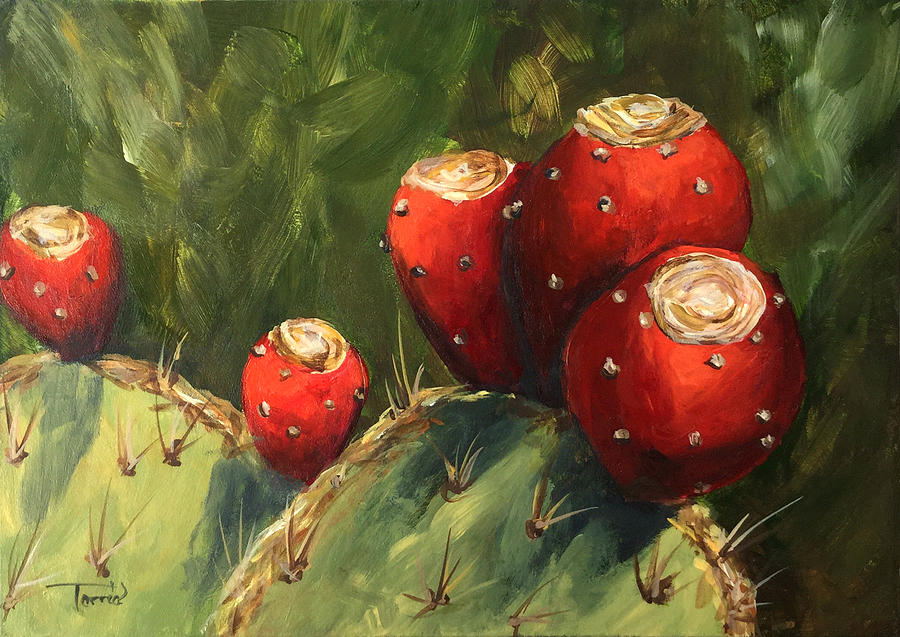
- Close-up: A close-up view can highlight the intricate details of the flower, the texture of the pads, and the sharp spines, creating a sense of intimacy and wonder.
- Landscape: A broader landscape perspective can showcase the prickly pear in its natural habitat, emphasizing its resilience and adaptability in challenging environments.
- Abstract: Abstract interpretations of the prickly pear can explore its form and color in a more expressive manner, capturing the essence of the plant without strict adherence to realism.
Color Palette
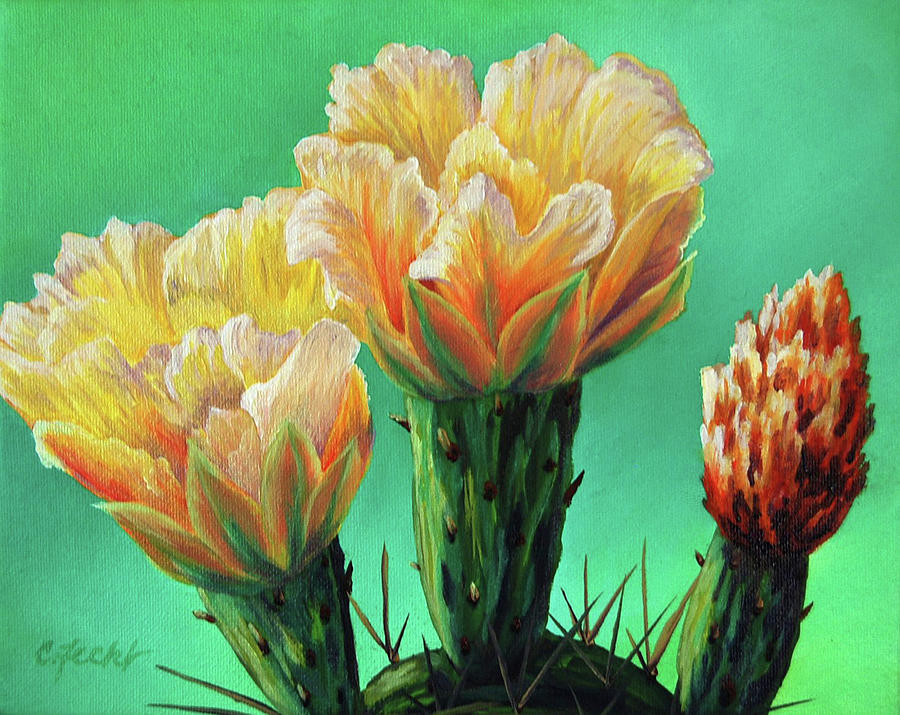
The prickly pear’s color palette is a vibrant mix of greens, yellows, oranges, reds, and purples.
- Greens: Use a variety of greens, from pale, almost yellow-tinged greens for the younger pads to deep, bluish-greens for the older, more mature ones.
- Yellows and Oranges: The vibrant yellows and oranges of the flowers are best captured with a mix of cadmium yellow, yellow ochre, and cadmium orange.
- Reds and Purples: For the deeper shades of red and purple, consider using alizarin crimson, quinacridone magenta, and ultramarine blue.

Capturing the Textures
The prickly pear’s textures are a defining characteristic.
- Pads: Use short, choppy brushstrokes to create the bumpy, textured surface of the cactus pads.
- Spines: Create the sharp, pointed spines using thin, crisp lines, and employ a darker shade of green or brown to emphasize their contrast against the pads.
- Glochids: Depict the tiny, barbed hairs with a fine, almost feathery brushstroke, using a light brown or gray color.
Light and Shadow
Light and shadow play a vital role in creating a sense of depth and realism in your painting.
- Direct Light: When painting in direct sunlight, the prickly pear will cast strong, defined shadows. Use a darker shade of the base color to create these shadows.
- Diffused Light: In diffused light, the shadows will be softer and more subtle. Use a slightly lighter shade of the base color to create these shadows.
Adding Details
- Background: The background of your painting can enhance the overall composition. Consider using a muted color palette for the background to create a sense of contrast against the vibrant prickly pear.
- Environment: If you’re depicting the prickly pear in its natural habitat, include elements like rocks, sand, and other desert plants to create a sense of place.
- Birds: Prickly pear cacti are often visited by birds, and including these feathered companions can add a touch of life and movement to your painting.
Prickly Pear Painting: A Step-by-Step Guide
Materials:
- Canvas or paper
- Watercolor paints, acrylics, or oils
- Brushes of various sizes
- Palette knife (optional)
- Pencil or charcoal for sketching
- Water container
- Rag or paper towels
- Reference photos of prickly pear cacti
Steps:
- Sketch: Begin by sketching the basic outline of the prickly pear on your canvas or paper. Use light, loose lines to avoid making permanent marks.
- Blocking in Colors: Apply the base colors to your canvas, starting with the pads, then the spines, and finally the flowers. Use broad strokes to establish the general shapes and colors.
- Adding Details: Gradually refine the details of your painting, adding more depth and texture to the pads, spines, and flowers. Use a variety of brushstrokes to create the desired effects.
- Light and Shadow: Introduce light and shadow to your painting, using darker shades to create shadows and lighter shades to highlight areas that are illuminated.
- Background: Add a background to your painting, using muted colors to create a sense of contrast against the vibrant prickly pear.
- Finishing Touches: Add any final details, such as birds, rocks, or sand, to complete your painting.
Tips:
- Use a variety of brushstrokes: Experiment with different brushstrokes to create the textures of the prickly pear’s pads, spines, and flowers.
- Work in layers: Build up your painting in layers, starting with the base colors and gradually adding more detail and depth.
- Don’t be afraid to experiment: Try different techniques and color combinations to find what works best for you.
- Take your time: Painting a prickly pear cactus is a rewarding process that requires patience and attention to detail.
Prickly Pear Painting: Beyond the Canvas
The beauty of the prickly pear extends beyond its visual appeal. Its fruit, known as the tuna, is a nutritious and delicious treat, and its pads are used in a variety of culinary applications.
Prickly Pear Recipes:
- Prickly Pear Jam: A sweet and tangy spread perfect for toast, biscuits, or yogurt.
- Prickly Pear Salsa: A refreshing and flavorful salsa that adds a unique twist to any Mexican dish.
- Prickly Pear Salad: A colorful and nutritious salad that features the prickly pear’s sweet and tangy fruit.
Prickly Pear in Art and Culture:
The prickly pear has long been a source of inspiration for artists and writers.
- Frida Kahlo: The Mexican artist Frida Kahlo was known for her use of prickly pear imagery in her paintings, often symbolizing resilience and strength.
- Literature: The prickly pear has been featured in numerous books and poems, often representing the beauty and resilience of the desert landscape.
Prickly Pear Conservation:
The prickly pear is an important part of the desert ecosystem, providing food and shelter for a variety of animals. However, the plant is facing threats from habitat loss, invasive species, and climate change.
Ways to Help:
- Support organizations that are working to conserve prickly pear habitats.
- Educate others about the importance of the prickly pear and its role in the ecosystem.
- Choose sustainable products that are made from prickly pear fruit or pads.
Conclusion:
Painting a prickly pear cactus is a rewarding experience that allows you to connect with the beauty and resilience of this remarkable plant. From understanding its unique characteristics to capturing its textures and colors, the process itself becomes a journey of appreciation for nature’s artistry. By incorporating elements of light, shadow, and background, you can create a painting that celebrates the prickly pear’s beauty and its importance in the natural world.

Nature’s Beauty: Creating a Prickly Pear Painting
Post a Comment for "Nature's Beauty: Creating A Prickly Pear Painting"