Cardinal in Snow Painting: Capturing Winter’s Beauty
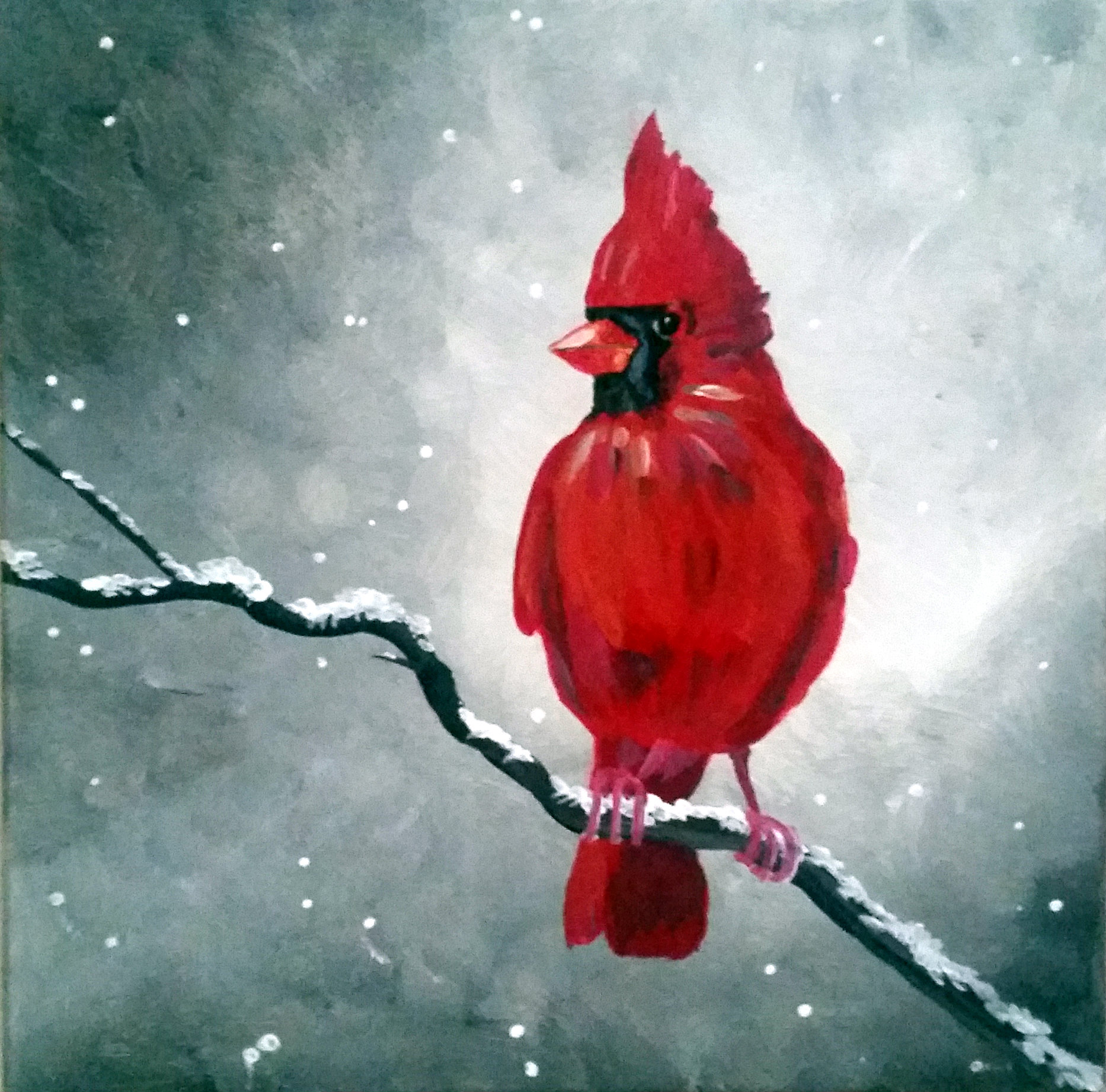
Table of Content
- 1 Cardinal in Snow Painting: Capturing Winter’s Beauty
- 1.1 Understanding the Cardinal’s Anatomy and Plumage
- 1.2 Choosing the Right Medium and Materials
- 1.3 Composition and Perspective
- 1.4 Capturing the Light and Shadow
- 1.5 Painting the Cardinal’s Plumage
- 1.6 Painting the Snow
- 1.7 Integrating the Cardinal into the Scene
- 1.8 Tips for Success
- 1.9 Conclusion
The cardinal, a vibrant splash of crimson against a backdrop of pristine white, is an iconic symbol of winter. Its presence brings a burst of color and life to the otherwise muted landscape, making it a beloved subject for artists seeking to capture the beauty of the season. Painting a cardinal in snow presents a unique challenge, requiring careful attention to detail, color theory, and the nuances of light and shadow. This guide will delve into the intricacies of capturing this captivating scene, offering insights and techniques to help you create a stunning and realistic portrayal of a cardinal in winter’s embrace.
Understanding the Cardinal’s Anatomy and Plumage
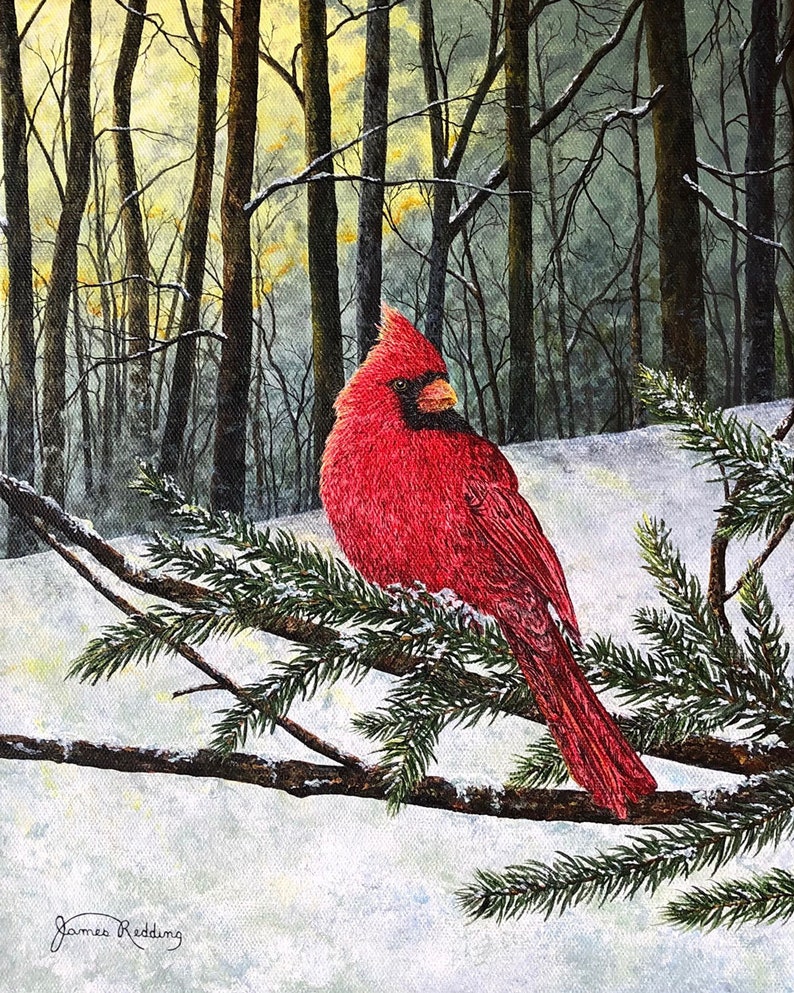
Before embarking on your painting journey, it’s essential to study the cardinal’s anatomy and plumage. The male cardinal, with its brilliant red feathers, is the most recognizable. The female, though less vibrant, still exhibits a beautiful reddish-brown hue.
Key Features:
- Crest: The cardinal’s prominent crest adds a touch of elegance and a sense of movement.
- Beak: The sturdy, conical beak is perfectly adapted for cracking seeds.
- Wings: The wings are relatively short and rounded, with a distinctive pattern of black and white feathers.
- Tail: The long, graduated tail feathers contribute to the bird’s streamlined appearance.
Color Variations:
- Male: The male cardinal’s plumage ranges from a bright scarlet to a deeper crimson, with variations influenced by lighting and individual birds.
- Female: The female cardinal’s plumage is typically a muted reddish-brown, often with hints of orange or yellow.

Choosing the Right Medium and Materials
The choice of medium and materials is crucial for achieving the desired effect in your painting.
Acrylics: Acrylic paints offer versatility, quick drying time, and a vibrant range of colors. They are suitable for both beginners and experienced artists.
Watercolors: Watercolors allow for subtle transitions and washes, capturing the delicate beauty of snow and the cardinal’s plumage.
Oil Paints: Oil paints provide rich colors, depth, and a smooth, painterly texture, ideal for achieving a realistic and detailed portrayal.

Brushes: Select brushes of various sizes and shapes to achieve different strokes and textures. Round brushes are suitable for details, while flat brushes are ideal for covering larger areas.
Paper or Canvas: Choose a smooth surface for acrylics and watercolors, while canvas provides a textured surface for oil paints.
Composition and Perspective
A well-composed painting draws the viewer’s eye and creates a sense of depth and balance.
Rule of Thirds: Divide your canvas into nine equal sections, placing the cardinal at one of the intersection points to create visual interest.
Leading Lines: Utilize branches, tree trunks, or the cardinal’s flight path to guide the viewer’s eye through the composition.
Perspective: Consider the perspective from which you are viewing the cardinal. A low angle can create a sense of grandeur, while a high angle emphasizes the bird’s vulnerability.
Capturing the Light and Shadow
Light plays a crucial role in conveying the mood and realism of your painting.
Sunlight: Direct sunlight creates sharp shadows and highlights, emphasizing the contrast between the cardinal’s red plumage and the white snow.
Overcast Skies: Overcast skies produce a softer, more diffused light, creating a subtle interplay of light and shadow.
Reflected Light: Pay attention to how light reflects off the snow, casting a cool blue or purple hue on the cardinal’s underside.
Shadows: Shadows are essential for defining form and creating depth. Observe how the cardinal’s body casts a shadow on the snow, and how the snow itself creates subtle shadows around the bird.
Painting the Cardinal’s Plumage
The cardinal’s plumage is a study in vibrant color and intricate detail.
Base Layer: Begin with a base layer of red for the male cardinal and a reddish-brown for the female. Use a light touch and allow the paper or canvas to show through for a more natural effect.
Highlights: Use a lighter shade of red or orange to create highlights on the cardinal’s breast, crest, and wings.
Shadows: Use a darker shade of red or brown to define the shadows on the cardinal’s body, wings, and tail.
Feather Details: Use fine brushstrokes to depict the individual feathers, paying attention to their shape and direction.
Glaucoma: The cardinal’s eyes are often a dark red or brown, with a distinct black ring around the pupil.
Painting the Snow
Snow is a challenging subject to paint, as it reflects light in a complex way.
Base Layer: Start with a light blue or gray base layer for the snow, allowing for variations in color depending on the time of day and the light conditions.
Highlights: Use white or a very light blue to create highlights where the snow reflects sunlight.
Shadows: Use a darker blue or gray to create shadows where the snow is shaded.
Texture: Use a variety of brushstrokes to create a sense of texture in the snow.
Depth: Create a sense of depth by varying the color and tone of the snow, with the foreground being darker and the background being lighter.
Integrating the Cardinal into the Scene
Once you have painted the cardinal and the snow, it’s time to bring the two elements together.
Placement: Carefully consider the cardinal’s placement within the composition, ensuring it is balanced and visually appealing.
Background: Create a simple but evocative background using trees, branches, or a distant landscape.
Depth: Use aerial perspective to create a sense of depth, with the background being less detailed and lighter in color than the foreground.
Atmosphere: Use subtle color variations and brushstrokes to create a sense of atmosphere, such as a light snowfall or a misty winter day.
Tips for Success
- Reference Photos: Use high-quality reference photos of cardinals in snow to study their anatomy, plumage, and behavior.
- Practice: Practice painting different aspects of the scene, such as the cardinal’s plumage, the snow, and the background, before attempting the complete painting.
- Patience: Painting a cardinal in snow requires patience and attention to detail. Don’t rush the process and allow yourself time to observe and experiment.
- Experiment: Don’t be afraid to experiment with different techniques and materials to find what works best for you.
- Enjoy the Process: Painting is a creative and rewarding experience. Enjoy the process of capturing the beauty of winter and the cardinal’s vibrant presence.
Conclusion
Painting a cardinal in snow is a challenging but rewarding endeavor. By understanding the bird’s anatomy, the nuances of light and shadow, and the techniques of painting snow, you can create a beautiful and realistic portrayal of this iconic winter scene. Remember to observe carefully, practice diligently, and enjoy the creative process. Your canvas will become a testament to the beauty and wonder of nature’s artistry, capturing the essence of winter’s magic.

Cardinal in Snow Painting: Capturing Winter’s Beauty
Post a Comment for "Cardinal In Snow Painting: Capturing Winter’s Beauty"